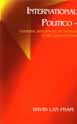
Cái Đình
International politico-cultural influences on Vietnam in the 20th century – David Lan Pham
David Lan Pham (1940) is afgestudeerd aan de Universiteit van Saigon (in geschiedenis
en aardrijkskunde). Hij was leraar in geschiedenis en vóór 1975 heeft hij belangrijke
functies bekleed in culturele en journalistieke aktiviteiten in Zuid Vietnam,
oa. Generale Secretaris van de Associatie van Leraren Geschiedenis en Aardrijskunde,
Generale Secretaris van de Associatie van Bibliotheken in Vietnam...
In 1986 heeft hij Vietnam ontvlucht en is uiteindelijk in de VS terechtgekomen.
Daar is hij aktief in de aktiviteiten voor de Vietnamese vluchtelingen.
Hij heeft diverse magazines opgezet (Bilingual Bulletin, Tin Viet en Dac San
Que Huong).
Zijn naam staat ook genoteerd in Marquis Who’s Who (2003 en 2004); en in Marquis
Who’s Who in the World (2004).
In 2004 is hij genomineerd als ‘Great Minds of the 21th century’ door de American
Biographical Institute (North Carolina, VS)
*
In de eerste 6 hoofdstukken van dit boek schetst David Lan Pham, logischgewijs
en in een heldere stijl, de invloed van de grote machten tussen de 16de en de
20ste eeuw (China, Frankrijk, Japan, Rusland, de VS en Engeland) op de politieke
koers van de bekende figuren van Vietnam in deze periode. Hoofdstuk 7 is gereserveerd
voor zijn visie over de positie van Vietnam in de wereld, gebaseerd op zijn
kennis in culturele achtergronden van Vietnam en van de Aziatische denkwijze.
Dit wordt tenslotte in zijn nawoord in de laatste hoofdstuk samengevat, met
de conclusies dat de tweede (de laatste) Vietnam-oorlog burgeroorlog noch ideologische
oorlog of revolutie-oorlog was zoals veel mensen hebben beweerd. Vietnam raakte
in de 20ste eeuw verwikkeld in de machtstrijd van vijf grote landen. De leidende
figuren waren ‘bevriend’ met één of meer van de regering van deze landen, echter
waren ze allemaal machteloos om de ‘hulp’ van deze landen te gebruiken voor
de ontwikkeling, en vooral voor de Onafhankelijkheid, Vrijheid en Welvaart van
hun eigen land.
Zie verder in zijn voorwoord hieronder.
*
PREFACE
Since the 16th century Vietnam has had contacts with the Europeans. The Spanish
missionaries propagated Catholicism in the Red River delta under the reign of
Mac Dang Doanh (15301540). In the South the Portuguese Jesuits propagated Catholicism
in present Central Vietnam. At that time the littoral provinces of present Central
Vietnam were not yet populous. The number of new converts was negligible.
In the 17th century the Dutch, British and Portuguese merchants came to Hoi
An (Faifo), the provincial capital of Quang Nam in Dang Trong (South), and to
Pho Hien, Hung Yen province in Dang Ngoai (North), to exchange goods.
The Dutch were influential in Dang Ngoai while the Portuguese were influential
in DangTrong. During the civil war between the Trinh and the Nguyen the Dutch
supported the Trinh. The Portuguese sided with the Nguyen. The Dutch battleships
were defeated twice by Nguyen Phuc Tan, future Lord Hien Vuong, in the South
China Sea. It disappointed the Trinh, who accepted the partition of Vietnam
in 1672.
In the 17th century both Lords Trinh and Nguyen banned the propagation of Catholicism
like the Tokugawa did in Japan. The foreign missionaries were expelled from
Dang Ngoai and Dang Trong.
At that time the foreign influences on Vietnam were not important. With the
support of the Dutch from Indonesia the Trinh failed to defeat the Nguyen whose
army was still infant. The Nguyen resisted the Trinh heroically and effectively
thanks to their strategy and popularity but not thanks to Portuguese Support.
Therefore, both the Trinh and Nguyen were independent from the foreigners.
In the 18th century French Bishop Pigneau de Behaine supported Lord Nguyen Phuc
Anh to cope with the Tay Son to restore power for the Nguyen in Dang Trong.
He was very active in the development of the Catholic Church in Vietnam and
in the establishment of the French political influence in the Far East. The
treaty of Versailles signed between Pigneau de Behaine on behalf of DangTrong
and De Montmorin on behalf of France in 1787 was the first step of his politico-religious
plan. When Lord Nguyen Phuc Anh was dependent upon Siam and France he failed
bitterly. He was successful when he was self-sufficient. France did not help
him but Bishop Pigneau de Behaine did. This Bishop died before Nguyen Phuc Anh
defeated the Tay Son to reunify the country.
The presence of the foreign Catholic priests and the Vietnamese Catholics in
the revolts of 1833, 1848, 1861, and 1866 in Vietnam led to the promulgation
of the edicts banning the propagation of Catholicism, and to the religious persecutions
giving French Emperor Napoleon III a good pretext to conquer Nam Ky (Cochinchina).
In the past Vietnam was influenced by Chinese and Hindu cultures. Islamic culture
was important in Champa (present Central Vietnam). The Cham were Brahmanic before
converting to Islam in the 13th century. In the 16th century the European missionaries
propagated Catholicism in DangTrong, Dang Ngoai, China, Japan etc. Vietnam became
the crossroad of Brahmanism, Buddhism, Confucianism, Taoism, Islam and Catholicism.
In search of the national liberation path, the Vietnamese revolutionaries absorbed
different cultures and socio-political doctrines in the 20`h century. Some praised
the Japanese reforms, and thought of Japanese assistance. Some loved Western
culture represented by France. The Francophiles believed in French mission eivilisatrice.
Phan Chu Trinh advocated modernization a l'occidentale to avoid unnecessary
bloodshed while Vietnam did not have enough force to defeat the French colonialists.
He was not Francophile.
Some were influenced by the Revolution of the Year of the Pig in China (1911),
and the San Min Chu I (Three People's Principles) promoted by Sun Yat-sen. Some
were attracted by Marxism-Leninism and the Russian Revolution of 1917. Some
were fascinated by American economic prosperity without paying much attention
to American democracy. Vietnamese leadership depended on the foreigners. Many
centuries ago the Vietnamese Kings must be recognized by the Chinese Emperors.
They were good at Chinese characters without speaking Chinese. From 1885 to
1945 all the Vietnamese Kings were chosen by the French. All the Vietnamese
leaders after World War II must win foreign support, and speak foreign languages.
Bao Dal, the last King of the Nguyen, studied in France from 1922 to 1932. He
abdicated in 1945. In 1949, supported by Washington and Paris, he returned to
power.
Ho Chi Minh's linguistic capacity was considerable. He spoke many languages
such as French, English, Russian, German, Spanish, some Chinese dialects etc.
He was trained twice in Moscow.
Ngo Dinh Diem spoke French and English. He graduated from the French Ecole de
Droit et d'Administration in Ha Noi. In 1954 he was totally supported by the
Americans and French Catholic rightists to be appointed Prime Minister by Bao
Dai in France.
Vietnamese nationalism was internationalized. Some Vietnamese politicians were
pro-French. Some were pro-Chinese. Some were pro-Russian. Some were pro-Japanese.
Some were pro-American.
Nguyen Van Xuan spent more than 60 years in France. Prince Cuong De spent 45
years of his life in Japan. Nguyen Hai Than lived in China in 38 years.
Ho Chi Minh lived in the foreign lands in 30 years.
Phan Boi Chau spent 20 years of revolutionary activities in Japan, China and
Siam (Thailand).
It was difficult for the nationalists of different social, political and cultural
inclinations to work together. They competed and rivaled one another.
Dong Duong Cong San Dang (Indochinese Communist Party) eliminated Viet Nam Quoc
Dan Dang (Vietnam Kuomintang), Viet Nam Cach Mang Dong Minh Hoi (Vietnam Revolutionary
Alliance) and other non-Communist parties such as Dai Viet, Duy Dan, Viet Nam
Phuc Quoc Hoi Dong Minh (League for the Restoration of Vietnam) etc.
The Stalinists (Third International) got rid of theTrotskyites (Fourth International)
without mercy.
Cao Dai, Hoa Hao, Binh Xuyen and Catholics changed their political stands several
times between the end of World War II and the collapse of the Republic of Vietnam.
Cao Dai were divided into four political tendencies: pro-Japanese (Tran Quang
Vinh, Le Van Hoach, Nguyen Hoa Hiep etc.), pro-Viet Minh (Cao Trieu Phat, Nguyen
Ngoc Bich etc), pro-Bao Dai (Pham Cong Tac, Nguyen Thanh Phuong, Le Van Hoach
etc.), and pro-American (Trinh Minh The). Hoa Hao were pro-Japanese, pro-Viet
Minh (Huynh Phu So), pro-Bao Dai (Tran Van Soai), and pro-American after the
fall of Ngo Dinh Diem (Luong Trong Tuong, Le Phuoc Sang). Binh Xuyen were pro-Japanese,
pro-Viet Minh, and pro-Bao Dai (Le Van Vien). The Northern-born Catholics and
the Southern-born Catholics did not have the same political view points after
1954. Most of them were pro-French and pro-Bao Dai during the Franco-Vietnamese
war. After 1954 most North Vietnamese Catholic refugees in South Vietnam leaned
toward the Americans and Ngo Dinh Diem. Many Southern-born Catholics sympathized
with Bao Dai whose wife was from the richest Catholic family in Cochinchina.
The pro-French rightists were not friendly with the pro-American rightists etc.
The Vietnam problems were internationalized. The struggle for independence was
transformed into the power struggle and ideological struggle. Willingly or unwillingly
the Vietnamese people bore all the disastrous and painful consequences of these
bloody struggles with their bones, blood, sweat, and tears. Vietnam was a sampan
around the whirlpool. It did not find the right way to keep away from the whirlpool
to move forward.
International Politico-Cultural Influences on Vietnam in the 20th Century is
the summary of the politico-cultural relations between Vietnam and the world
Powers and Superpowers. The author summarizes the politico-cultural influences
of the Big Five on Vietnam in the past century. He also reflects the echo of
the two Vietnam wars in the world from 1945 to 1975.
The ironical and controversial thing was that the Vietnamese people won the
war after nine years of struggle for independence to have their country partitioned.
After 30 years of carnage and bloodshed Vietnam had a huge debt. Its economy
was ruined. Its eminence grise was almost destroyed by the brutal class struggle
and political turmoil. Disunion, separation and resentment were a national wound
which was painful, chronic and almost incurable. Economic dependence could not
ensure political independence. The motto Independence, Freedom, Happiness is
very simple but it is hard to carry it out.
I am grateful to:
* All the Vietnamese, American, French, and Chinese authors whose works helped
me write International Politico- Cultural Influences on Vietnam in the 20th
Century.
* Dr. Chau Long and Dr. Nguyen Ngoc Huy, who exchanged thoughts, ideas, and
political view points with the author before 1975.
* My wife Tammy N. Pham, children (Albert Q. Pham, Elizabeth L. Pham; Wellington
N. Pham, An Q. Pham and Victoria C. Pham), daughters-in-law (Courtnie H. Pham
and Ping Pham), and grand daughter Elaine A. Pham for bringing me joys to finish
this book.
* American democracy, and to the American people's generosity.
Frankly speaking, I could not write International Politico-Cultural Influences
on Vietnam in the 20th Century without freedom. I hope this book will bring
the readers something familiar, new, interesting and useful.